display-middle-ads-here
To an outsider, and on the surface of things, the average Joe might struggle to see how this month’s devastating wildfires in Los Angeles could influence the impact of the global financial sector on day-to-day life.
But taken to extremes, it’s not entirely fantastical to see how climate change and financial institutions’ reaction to it might lead to a dystopian future of social migration and a seismic shift in how we define community.
Historically we've always planned for individual events, whether those are environmental – hurricanes, snow, wind, flooding, and so on – or geopolitical change through civil war or cross-border conflict and/or changes in government.
But it is the absence of planning for a perfect storm of simultaneous individual events that perhaps offers the greatest lesson we can learn from the LA wildfires’ hellish destruction of life and property.
In this interview, CeFPro Head of Content Mark Norman asks Connect guest editor Craig Spielmann for his take on why there is so much for the financial services sector to consider in the aftermath of the worst climate event in recent memory, and why MESS – Multi-Event Simultaneous Scenario planning – should be an integral part of future risk management.
Craig, I guess the first question seems straightforward, but might have a complex answer: from a risk management perspective, are we truly learning from big simultaneous world events like the fire? Or are we simply making the same mistakes over and over again?
So, I think my starting point really goes back a few years when I started really seeing one in a thousand-years events frequently beginning to noticeably occur more frequently. And for me that raised the question of why we were routinely modelling scenarios that only looked at one event.
When we put the multiple aspect together, we started seeing a very different picture. For example, we went through the scenario of hot wall with North Korea and a Category 4 hurricane hitting the whole East Coast of America.
And as we walked through the scenario, a lot of people changed the way they would do in response to two simultaneous events that would have a global impact, compared to what they would do in response to an isolated event.
If you look at COVID, as another example, that was also part of a simultaneous multi-event, because the move to online-based home working opened up a whole wave of cyber attacks.
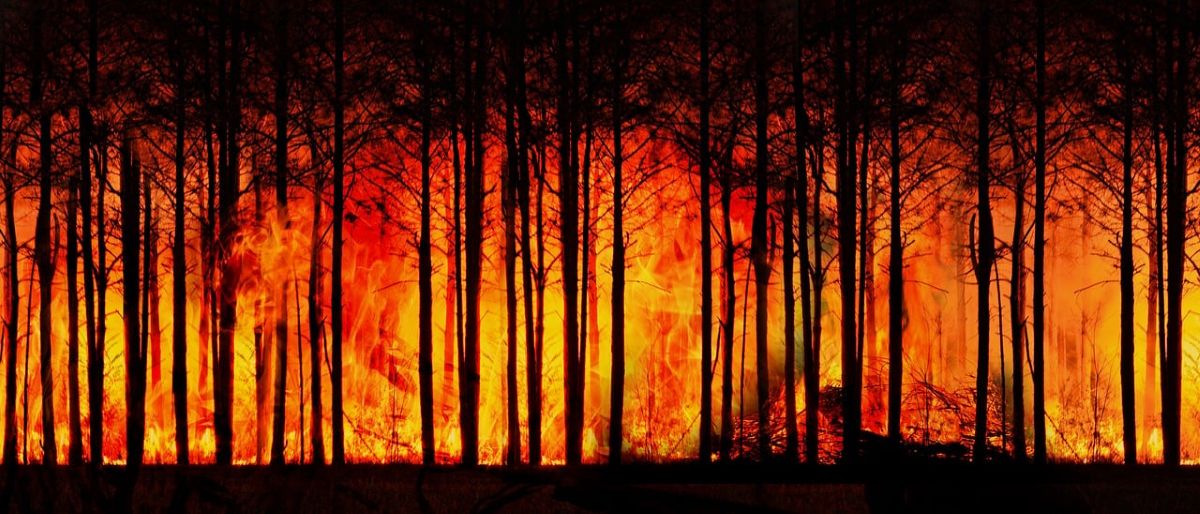
In climate terms, 2024 was the hottest year on the planet and while you could look at the current fires in in California and say they’re just part of one event, they really aren’t.
You have a fire that starts. But then you add in high winds, like we’ve seen in LA, and that’s another event. But when you put them together, you just know it makes it a thousand times worse. The result here is devastation the like of which we haven't seen since the bombings in Europe in World War 2.
So the question really is are we learning from these things? And the answer is that I think some people are and some people aren't. And that’s really the problem, right there.
I think everybody has to use the MESS approach and stop taking an individualistic view of this stuff when it comes to managing risk.
At the moment, there’s too much inclination to deal with events like this separately – I offset this, and then that’s it and I go on to the next thing.
Instead we need to look at the interactions of multiple events going on and incorporate that into all our risk planning.
Looking more broadly, when you consider the conflicts in Russia and Ukraine, the situation in the Middle East, the emerging civil disorder in Southeast Asia now – all of that has an impact on the global economy, right?
The budgetary effect of a contracting economy, it seems to me, is fewer resources on the ground to deal with events, like the wildfires, that should be part of scenario planning. So isn’t the MESS approach really a no-brainer?
Absolutely. About eight years ago we looked at the real estate sector in New York. It’s worth trillions or dollars. But if water comes over Manhattan doesn't leave, then all those mortgages are literally underwater.
You look at what's happened in California right now, it's going to be the same thing – those mortgages have been burned out of existence.
So, what’s the impact? Obviously the insurers are taking a big hit, but what about the the default on mortgages? Are we going to see a tremendous wave of defaulted payments? You know, if someone doesn’t have a house, they're probably not going to pay their mortgage.
So from a financial perspective, there's going to be so many outcomes of this that it's going to take a while to really figure out the damage. But there is going to be damage especially amongst the smaller institutions that may not have as much capital cushioning.