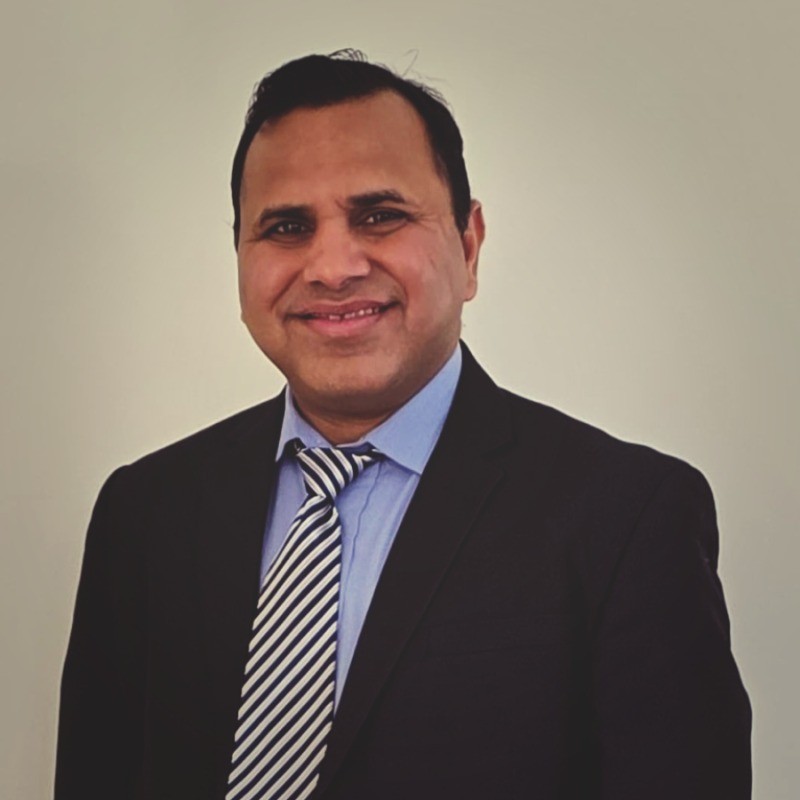
Krishan Sharma shares his journey from technology and risk modelling into a leadership role overseeing model risk management at Citigroup. The article explores his work across capital forecasting, stress testing, AI governance, and predictive analytics, h
In an era when financial institutions are becoming increasingly dependent
on models to make critical decisions, Krishan Sharma has built a career around
a deceptively simple question: how do you know whether those models can be
trusted?
Today, as Senior Vice President of Model Risk Management at Citigroup in
New York, Sharma works at the intersection of quantitative analysis, regulatory
scrutiny, and executive decision-making. He leads a global team responsible for
capital forecasting and credit-loss modeling across wholesale, retail, and
trading portfolios.
His responsibilities span capital planning, credit risk, stress testing,
AI governance, and predictive analytics. Several of the frameworks he has developed
have moved beyond academic publication into practical adoption by financial institutions
and fintech firms.
What distinguishes Sharma is his ability to bridge analytical complexity
and executive decision-making. Throughout nearly two decades in risk management,
he has focused on translating sophisticated quantitative concepts into frameworks
that regulators, executives, and practitioners can trust.
His journey began in Jaipur, India, where an early interest in
mathematics led him into information technology. After graduating with a degree
in IT, he spent a year at a technology startup, gaining firsthand experience of
how systems perform in the real world.
The lessons he learned about data quality, operational resilience, and
system failure later became central to his work in model risk management.
Seeking to combine technology with business decision-making, Sharma
completed an MBA in Finance before building and validating credit and market risk
models across India’s major financial centers.
The experience exposed him to retail and wholesale portfolios, early
warning systems, and the practical realities of moving analytical models into production.
Relocating to New York, Sharma joined HSBC’s risk modelling function,
where he supported the bank’s Comprehensive Capital Analysis and Review (CCAR) process.
His contribution to the firm’s first CCAR non-objection earned him a CEO
Award and provided valuable insight into regulatory expectations and model validation
standards that would shape his later career.
After joining Citigroup, his remit expanded to include CCAR, CECL, IFRS
9, ICAAP, climate risk, and the governance of artificial intelligence and
machine
learning models.
During this period, Sharma’s influence extended beyond the institutions
that employed him. Within a single publication cycle, he authored four
peer-reviewed papers in the Journal of Risk Model Validation, the Journal of Operational
Risk, and Finance Research Letters, addressing some of the industry’s most pressing
model risk challenges.