As AI becomes embedded in model risk management, firms are focusing on practical use cases that strengthen inventory oversight, documentation review, and risk monitoring. With regulatory expectations rising around transparency and accountability, this Q&A
In an era of
dashboards, forecasts, and real-time data, the persistence of major risk
failures presents a paradox.
Financial
crises, infrastructure collapses, governance scandals, and geopolitical shocks
are routinely described as surprises even though they were glaringly obvious:
mentioned widely in headlines, top-risk lists, and industry and internal
company discussions.
Michele Wucker
has spent more than a decade challenging the comforting fiction that these
events are unforeseeable.
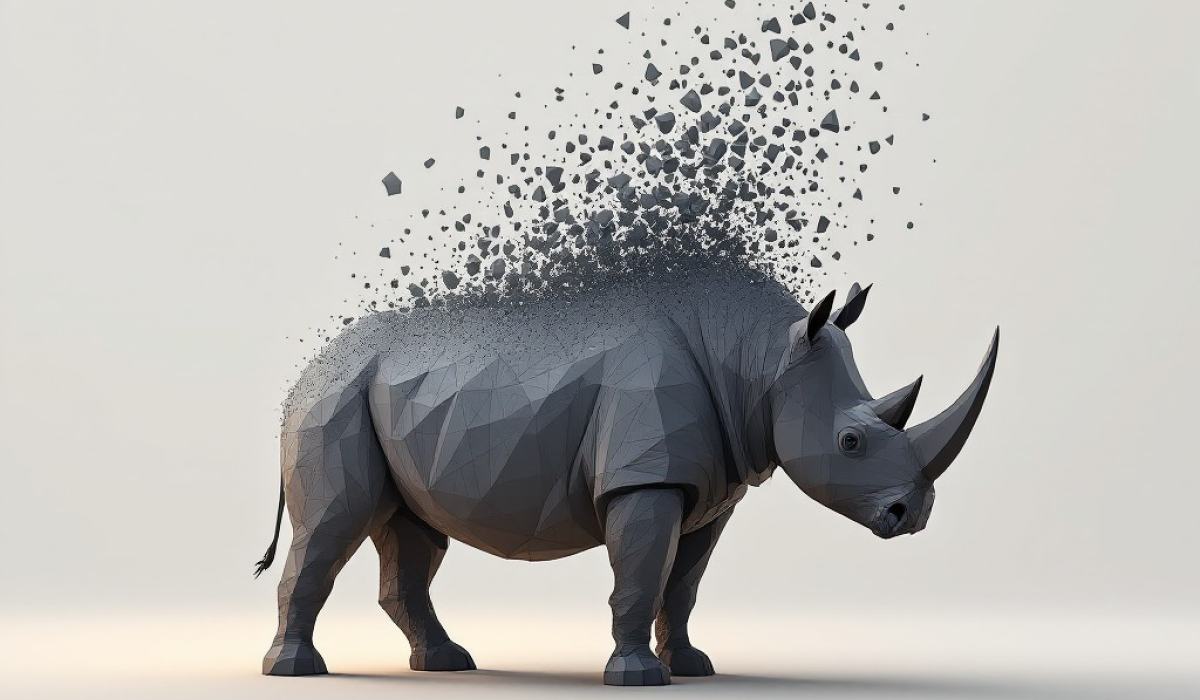
The Gray
Rhino, the metaphor that defines her strategic advisory work and spawned a
bestselling book, refers to dangers that are visible, probable, and potentially
catastrophic.
It was
inspired by her decades of work as a global economic policy and finance analyst
and leadership positions in think tanks.
Gray rhinos
are not mysterious tail risks lurking at the margins of probability
distributions. They are the large, obvious threats standing directly in the
path of decision makers. They come in various sizes, speeds, shapes, and
solvability –aspects of the accompanying analytical framework.
“The gray
rhino is the thing you can see in front of you,” Wucker says. “Some people step
up and deal with it in an effective way. Some people freeze and get trampled. And
others do nothing in the sure and resolute belief that it’s so obvious that
someone else must surely be dealing with it.”
The
persistence of gray rhinos is not a failure of intelligence or access to
information. According to Wucker, it is a failure of response.
Organizations
see the risk, sometimes acknowledge it, and all too often delay meaningful
action until the cost of intervention far exceeds the cost of prevention.
At the heart
of this failure lies human psychology. Wucker points to denial as a universal
response to threatening information. But her core message is that failure is
not inevitable.
Drawing on
Elisabeth Kübler-Ross’s work on grief, she emphasizes that denial is common.
“It’s a perfectly human response,” she says. “There’s no shame in not always
dealing with the obvious things in front of you -but there also is considerable
benefit in facing up to them.”
Denial, she
explains, can be protective. Absorbing the full emotional and practical
implications of a threat all at once can be overwhelming. The brain creates
distance to cope. The danger emerges when denial becomes habitual.
“If you rely
on denial too long,” Wucker warns, “that also is not healthy.”
Organizations
often rationalize this delay. They convince themselves that risks are
exaggerated, that conditions will change, or that someone else is addressing
the issue.
Because gray
rhinos are obvious, there often is an implicit assumption that responsibility
must lie elsewhere. This assumption allows inaction to persist without
triggering alarm.
Individual
psychology is only part of the picture. Group dynamics amplify these
tendencies. Wucker highlights groupthink as a powerful force in organizational
failure, particularly in leadership teams that share similar backgrounds,
incentives, and perspectives.
“When you have
a lot of people in a room, especially when they come from similar backgrounds
and perspectives,” she says, “they are much less likely to consider red flags
and alternatives than a more diverse group would be.”
Power dynamics
further suppress challenge. Once the most senior figure in a room articulates a
view, dissent becomes socially risky.
“There’s real
social pressure not to contradict the most powerful person in the room,” Wucker
notes. Over time, this pressure narrows debate and discourages escalation of
uncomfortable truths and information.
Structural
incentives reinforce these behavioral patterns. Quarterly reporting cycles,
executive compensation tied to share price, and short leadership or political
tenures all bias decision making toward delay. Leaders may calculate,
consciously or unconsciously, that postponement carries less personal risk than
decisive action.
Wucker
observes that many people fear active failure more than passive loss. “People
feel they’ll be penalized less for doing nothing than for doing something and
it turning out to be the wrong thing,” she says.
In such
environments, inaction becomes the safer career move, even when it increases
organizational risk.
Compounding
these challenges is a widespread misunderstanding of what risk actually means.
In practice, many organizations equate risk with hazard. Risk registers become
lists of threats rather than frameworks for decision making. This framing
strips risk of its strategic dimension.
“Risk is a mix
of hazard and opportunity,” Wucker says. “It drives me bonkers when people say
risk versus opportunity. Opportunity is inherently a part of a risk.”