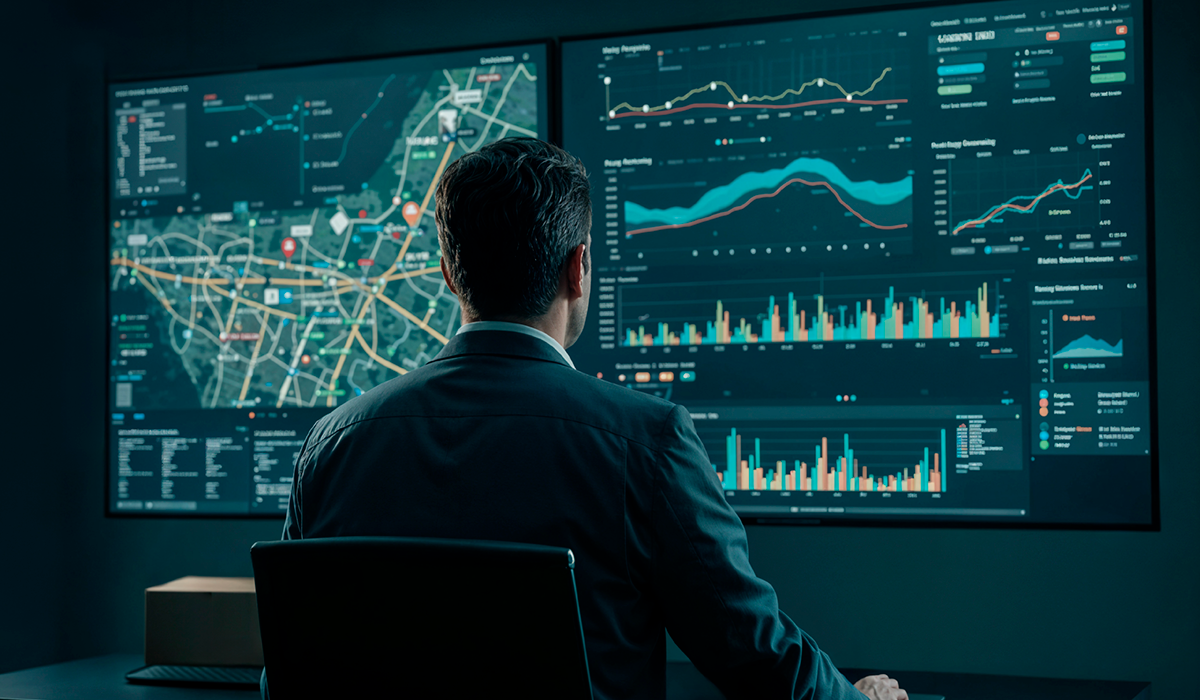
Continuous monitoring is transforming risk management in financial services, shifting focus from static dashboards and scores to real-time signals that enable faster, more effective decision-making and resilience.
Continuous monitoring is rapidly
becoming the backbone of modern risk management in financial services, but
leading institutions are discovering that dashboards and scores alone are no
longer enough to manage today’s dynamic risk landscape.
For years, banks and insurers relied
on periodic assessments, static risk ratings, and visual dashboards to track
exposure across vendors, cyber threats, and operational risks.
That model is now proving inadequate.
In an environment defined by real-time threats, interconnected ecosystems, and
accelerating technological change, risk is no longer something that can be
measured at a single point in time.
“Traditional vendor risk management
relied on point-in-time assessments that quickly became outdated,” according to
industry analysis, highlighting how quickly risk profiles can shift between
scheduled reviews.
The response has been a decisive move
toward continuous monitoring. At its simplest, this involves ingesting a wide
range of real-time signals - from threat intelligence feeds and breach
databases to financial indicators and regulatory filings - and using them to
detect changes in risk as they occur.
But the real transformation goes
deeper. Continuous monitoring is no longer just about collecting more data. It
is about turning that data into timely, actionable decisions that shape how
institutions respond to risk.
This reflects a broader shift across
financial services. Regulators and industry bodies are increasingly demanding
“real-time evidence of resilience” rather than static compliance artifacts,
signaling a move away from documentation toward demonstrable operational
capability.
In practice, this means that
dashboards - once the centerpiece of risk reporting - are becoming just one
layer of a much more complex system. While they still provide visibility, they
do not, on their own, enable effective risk management.
The problem is twofold. First,
dashboards often present lagging indicators. By the time a risk score changes,
the underlying issue may already have materialized. Second, they can create a
false sense of control, where visibility is mistaken for action.
Leading institutions are therefore
shifting toward signal-driven models. Instead of relying on aggregated scores,
they focus on specific, high-value signals that indicate meaningful changes in
risk - such as a vendor’s security posture deteriorating, a sudden spike in
fraud activity, or signs of financial distress in a critical supplier.
“Continuous monitoring operates
constantly,” drawing on diverse data sources to identify material changes and
trigger investigation, rather than waiting for periodic reviews.
This shift is particularly evident in
third-party risk management. As supply chains grow more complex, the ability to
detect and respond to vendor risk in real time has become essential.